


-
LOCATION:HOME >> PRODUCT >> Titanium Alloy >> Titanium Alloy Rod
-
Titanium Alloy Rod
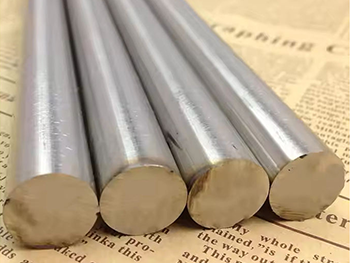
Custom High Purity Titanium Round Bar Titanium Rod Price
High-purity titanium round bars are formed by using sponge titanium as the raw material and through precise melting, forging, and rolling processes.
Grade | GR1,GR2,GR3,GR5,GR6,GR7,GR9,GR11,GR12, etc. |
Standard | ASTM B265,ASTM F136,ASTM F67,AMS4928 |
Size | 0.5-5.0mm x 1000mm x 2000-3500mm (Thickness x Width x Length) |
Application | Metallurgy, electronics, machinery, medical treatment, chemical industry, petroleum, medical treatment, aerospace |
Supply status | M (Y/ R/ ST) |
Feature | High corrosion resistance, low density, good thermal stability |
Technics | Hot Forged, Hot Rolled, Cold Rolled, Annealing, Pickling |
Surface | Bright, Polished, Pickling, Acid cleaning, Sandblasting |
Packing | Export Standard Woodcase |
MOQ | 100kg |
Certificate | ISO 9001:2008; The third test report; TÜV Rheinland; |
Delivery time | 7-15days according to the quantity and process of the product |
Quality and test | Hardness test, Bending test, Hydrostatic etc. |
High-purity titanium round bars are formed by using sponge titanium as the raw material and through precise melting, forging, and rolling processes. They are in the form of rod-shaped components, retaining the core advantages of titanium materials such as "lightweight, corrosion resistance, and high strength". Grade 1 (TA1/GR1) and Grade 2 (TA2/GR2) titanium bars fall within the category of industrial pure titanium and are representatives of α-type titanium alloys. With excellent comprehensive performance, they have become key structural materials in high-end fields such as chemical engineering, marine, medical, aerospace, etc.
Grade 1 titanium rod (TA1/GR1)
Purity grade: Titanium content ≥ 99.0%, this is the highest purity grade among industrial pure titanium.
International equivalent: American Standard ASTM Grade 1, European Standard 3.705
Key features: The impurity control is the most stringent, the plasticity is excellent, and the elongation rate can reach 25-40%, making it suitable for scenarios that require high formability and corrosion resistance.
2. Grade 2 Titanium Rod (TA2/GR2)
Purity grade: Titanium content ≥ 99.2%, impurity content slightly higher than TA1
International equivalent: American Standard ASTM Grade 2, UNS R5040
Key feature: The strength is increased by approximately 40% compared to TA1, with the tensile strength reaching ≥ 345 MPa. It maintains excellent corrosion resistance while providing higher load-bearing capacity.
Physical properties and core advantages
1. Lightweight and high strength
Density: 4.51 g/cm³, which is only 57% of that of steel and 1.7 times that of aluminum.
Specific strength: The ratio of strength to density is much higher than that of stainless steel and aluminum alloys. It is an ideal choice for lightweighting in aviation and automobiles.
2. Outstanding corrosion resistance
Seawater environment: The corrosion rate of TA2 in seawater is less than 0.005 mm per year, which is only 1/20 of that of 316L stainless steel.
Chemical medium: A dense TiO₂ passivation film naturally forms on the surface, which can withstand corrosion by dilute acids, alkaline solutions and oxidants.
Suitable for all environments: exhibits excellent performance in acidic (concentration < 10%), alkaline (such as 50% NaOH) and chloride-containing environments.
3. Wide Temperature Range Adaptability
Low-temperature performance: Maintains high toughness even at -196℃ (liquid nitrogen temperature), without exhibiting low-temperature brittleness.
High-temperature stability: At 300℃, the tensile strength remains above 80% of the value at room temperature, and the short-term working temperature can reach 400℃.
4. Excellent biocompatibility
Medical grade certification: Compliant with ASTM F136 surgical implant standards, with a cytotoxicity level of 0.
Bone integration ability: Promotes the growth of bone cells on the surface, used in artificial joints, dental implants, etc. With a low postoperative infection rate.
Safety: The release of titanium ions is extremely low (<0.1 μg/cm²/week), with no risk of sensitization or carcinogenesis.
Next:No More!